Strain Gauge Weight Scale
Op-amp instrumentation · UBC Mech 368
- Project year
- 2025
- Status
- Completed
A kitchen-style digital scale built from a load cell: an MCP6002 instrumentation amplifier, offset stage and Arduino-based readout with stability filtering, calibrated in MATLAB.
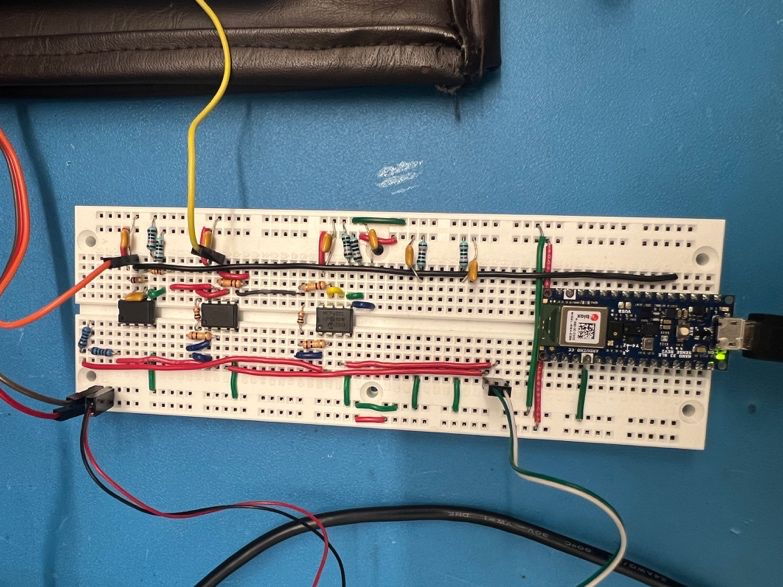
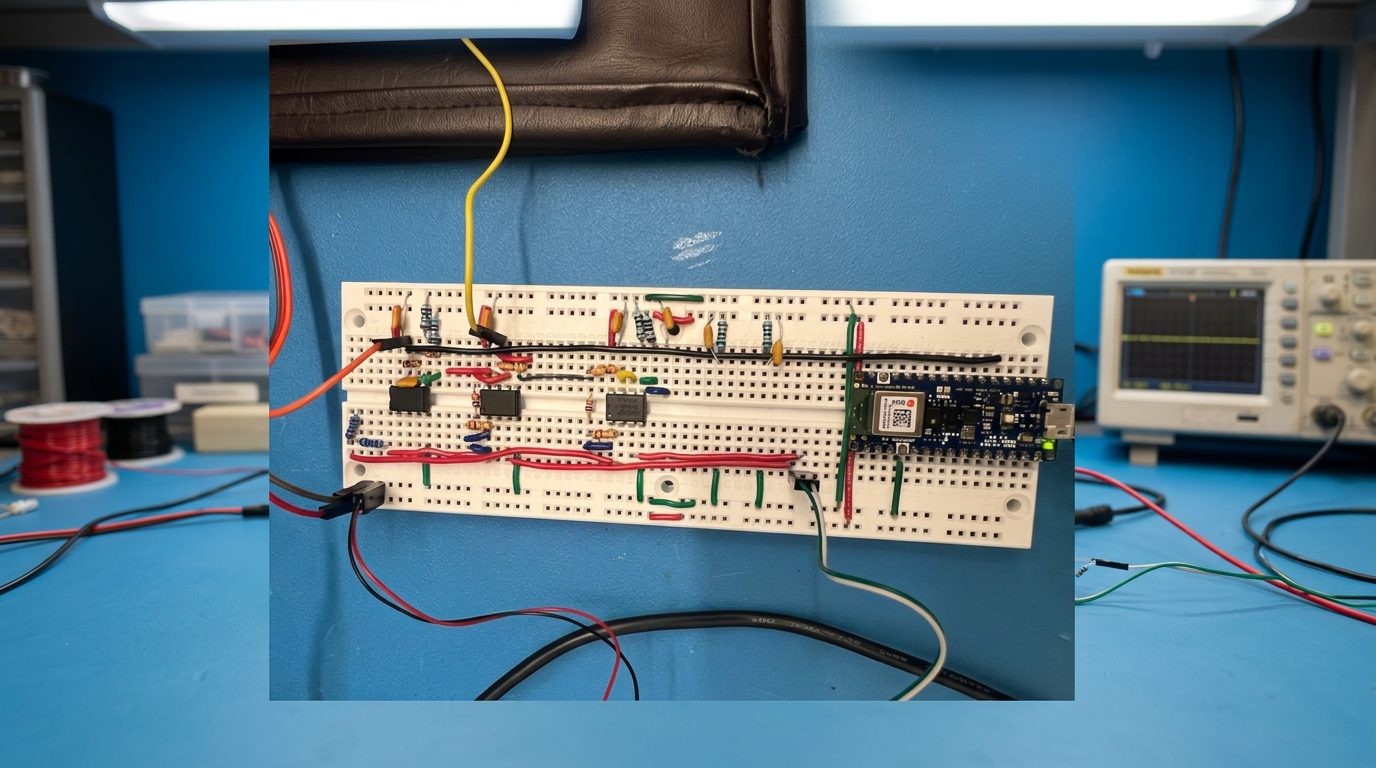
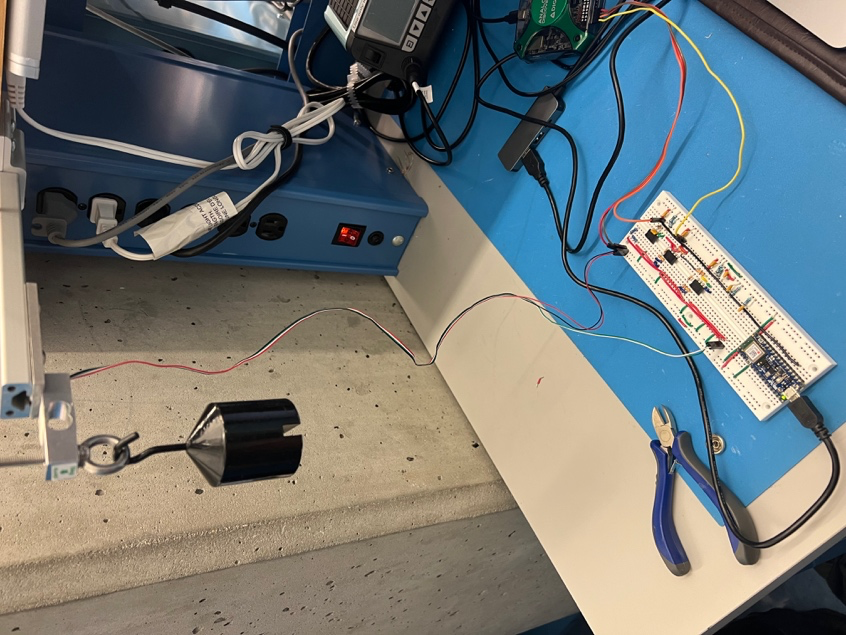
This project — from UBC's Mech 368 instrumentation course — involved designing and building a strain gauge weight scale from raw analog electronics up to a calibrated digital readout. The tiny differential voltage from a load cell was amplified using a three-op-amp instrumentation amplifier built from MCP6002 op-amps, then shifted into a usable 0–2.5 V range with an offset amplifier and a dedicated 2.5 V reference circuit.
Circuit design — The instrumentation amplifier gain was derived analytically and verified in both MATLAB/Simulink simulation and on the breadboard: a target gain of 210 was set with a 10 kΩ RG, and the measured gain of ~240 confirmed the design within expected component tolerances. Capacitors were added to suppress high-frequency noise.
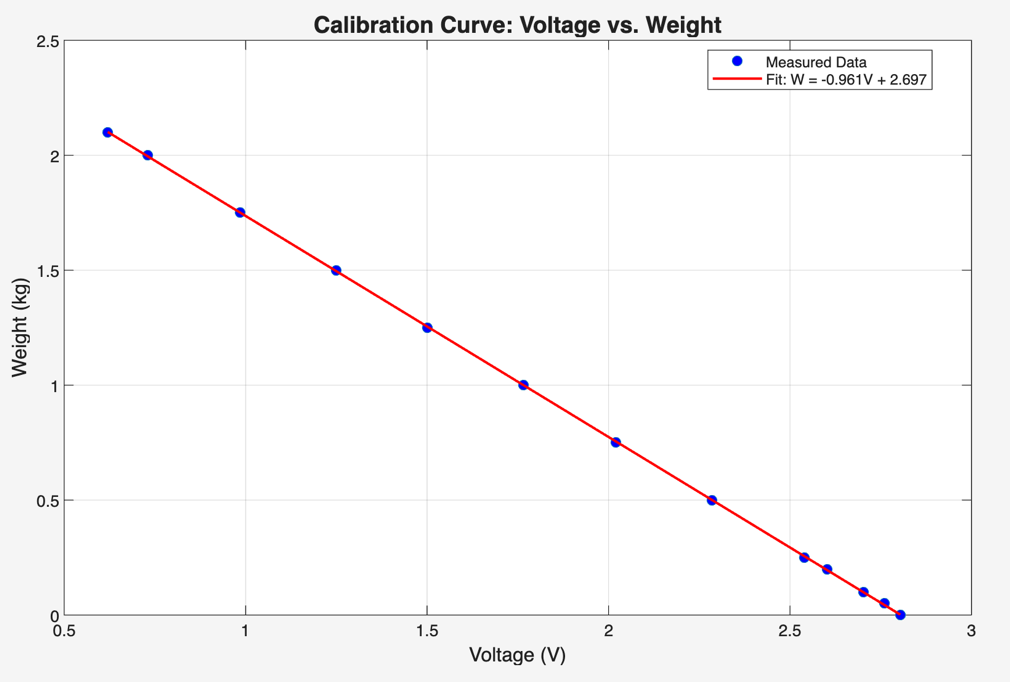
Calibration — Thirteen known weights from 0 to 2100 g were recorded against output voltage, and a linear fit was computed in MATLAB using polyfit, giving the calibration equation Weight = −0.961 × Voltage + 2.697 (kg). The strong linear relationship confirmed the amplifier chain behaved as designed.
Readout software — An Arduino digitized the signal, and a MATLAB program converted voltage to weight in real time, only displaying a value once the reading was stable within 10 g for 500 ms — emulating the behaviour of a commercial kitchen scale. The system produced accurate, stable measurements up to 2 kg.