ROUV
Remotely operated underwater vehicle
- Project year
- 2025
- Status
- Completed
A Blue Robotics ROV-2 rebuilt with waterproofing, leak sensors, GPS, sonar, depth and water-quality sensing, plus a custom 3D-printed camera mount.
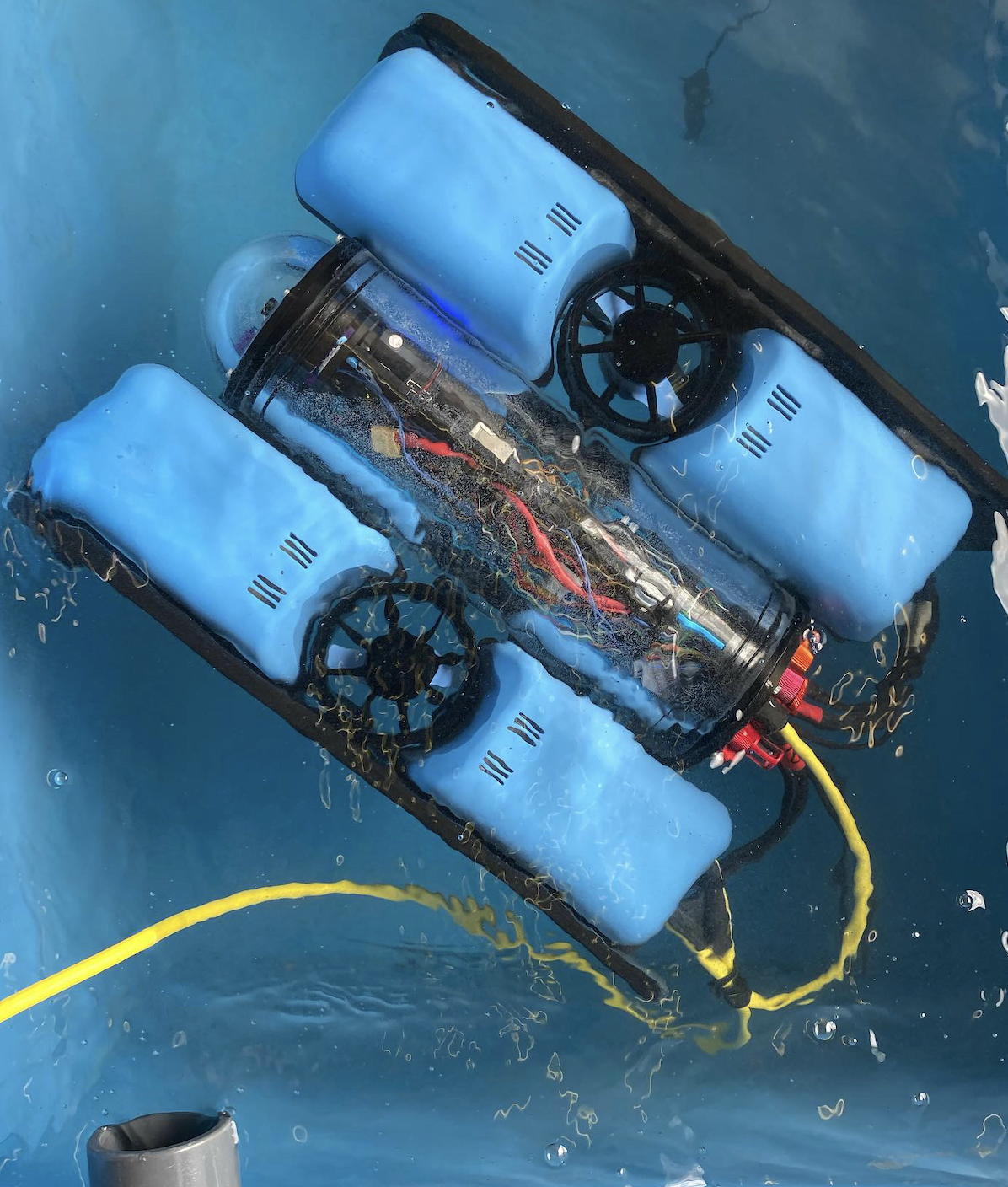
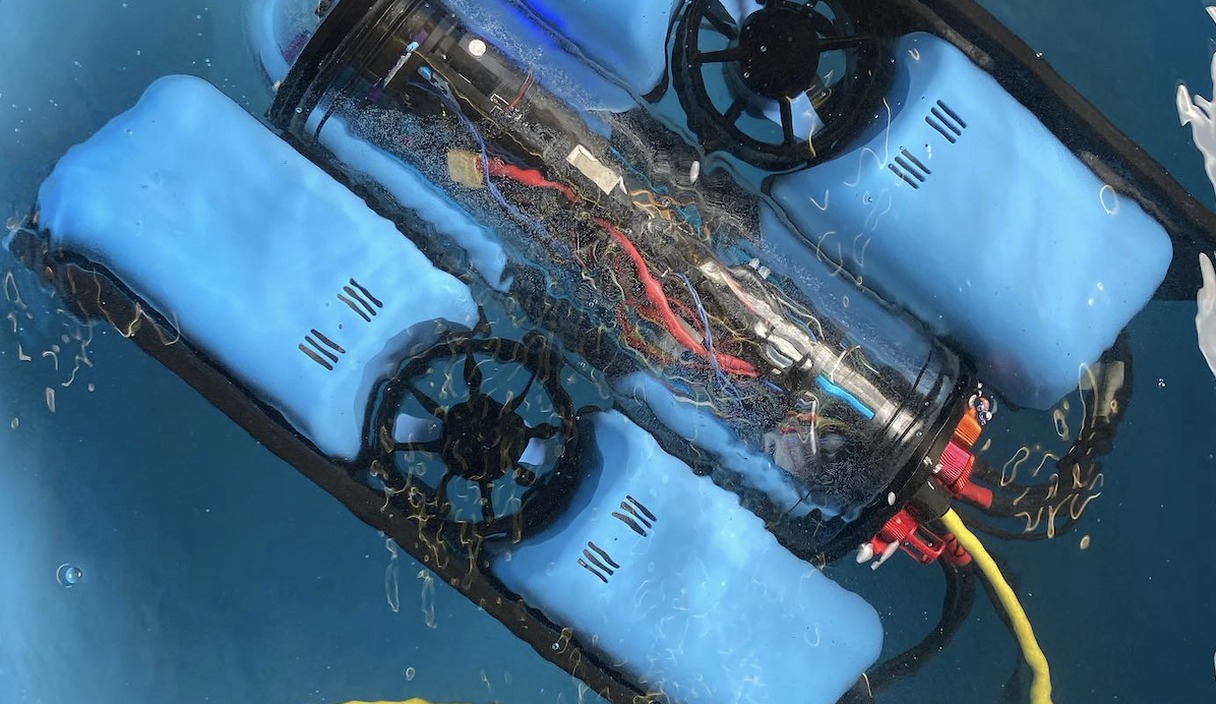
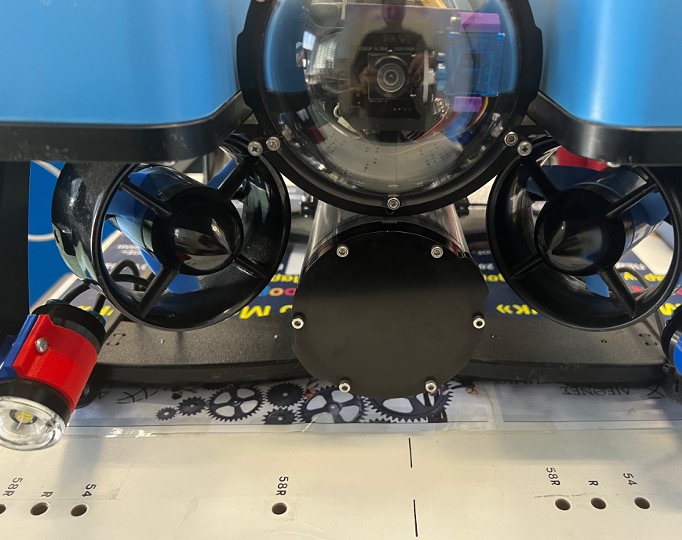
The Remotely Operated Underwater Vehicle (ROUV) project involved the assembly, modification, and testing of a Blue Robotics ROV-2 platform for marine research applications. The unit was fully waterproofed, equipped with leak sensors, GPS, sonar, and a depth-sensing pressure sensor, and rebuilt to integrate new functionality. A custom 3D-printed camera mounting bracket was designed and installed to enhance underwater imaging, and multiple environmental sensors were added to expand marine data collection.
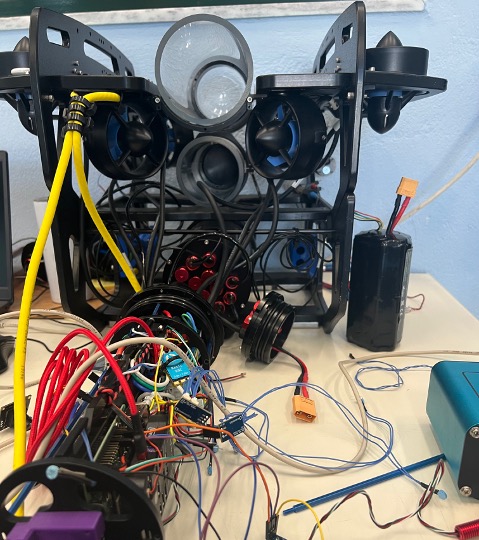
Waterproofing and leak detection — All enclosures and cable feedthroughs were sealed with marine-grade materials to prevent water intrusion under pressure, with additional O-rings and sealing compounds at connection points. Leak detection sensors inside the electronics housing alert the operator immediately in case of water ingress, enabling rapid recovery. Testing showed reliable response to simulated breach conditions.
GPS and sonar navigation — The GPS module provides accurate surface positioning during deployment and recovery. Since GPS cannot penetrate water, sonar was integrated for underwater navigation, obstacle detection, and depth mapping — particularly important in murky or low-visibility conditions. Together they form a hybrid navigation approach.
Environmental sensors and camera mount — pH, temperature, and pressure sensors support marine data collection, with the pressure sensor enabling accurate depth measurement. A custom 3D-printed bracket mounts an underwater camera for real-time video streaming and recording.
Results — The rebuilt ROUV demonstrated stable underwater maneuverability and reliable data collection. Controlled pool trials confirmed the waterproof sealing, sonar detected underwater obstacles, and depth readings matched reference values. Challenges included limited battery endurance and sensor calibration in varying water conditions. Future work includes longer battery life, autonomous navigation, and additional water quality sensors.