Rough Terrain Vehicle
Remote controlled off-road platform
- Project year
- 2025
- Status
- Completed
A small-scale RC vehicle with a three-speed transmission, custom independent suspension and steering, designed in CAD and fabricated in-house.
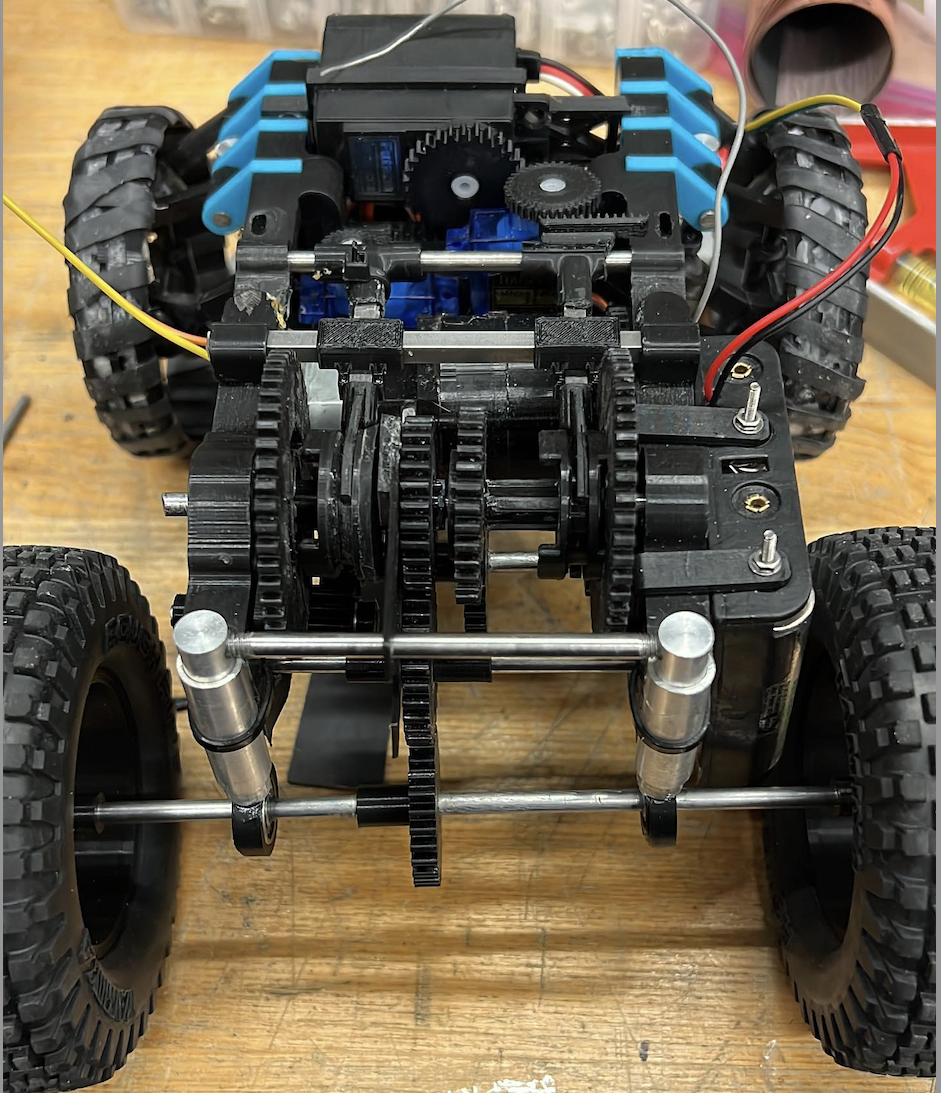
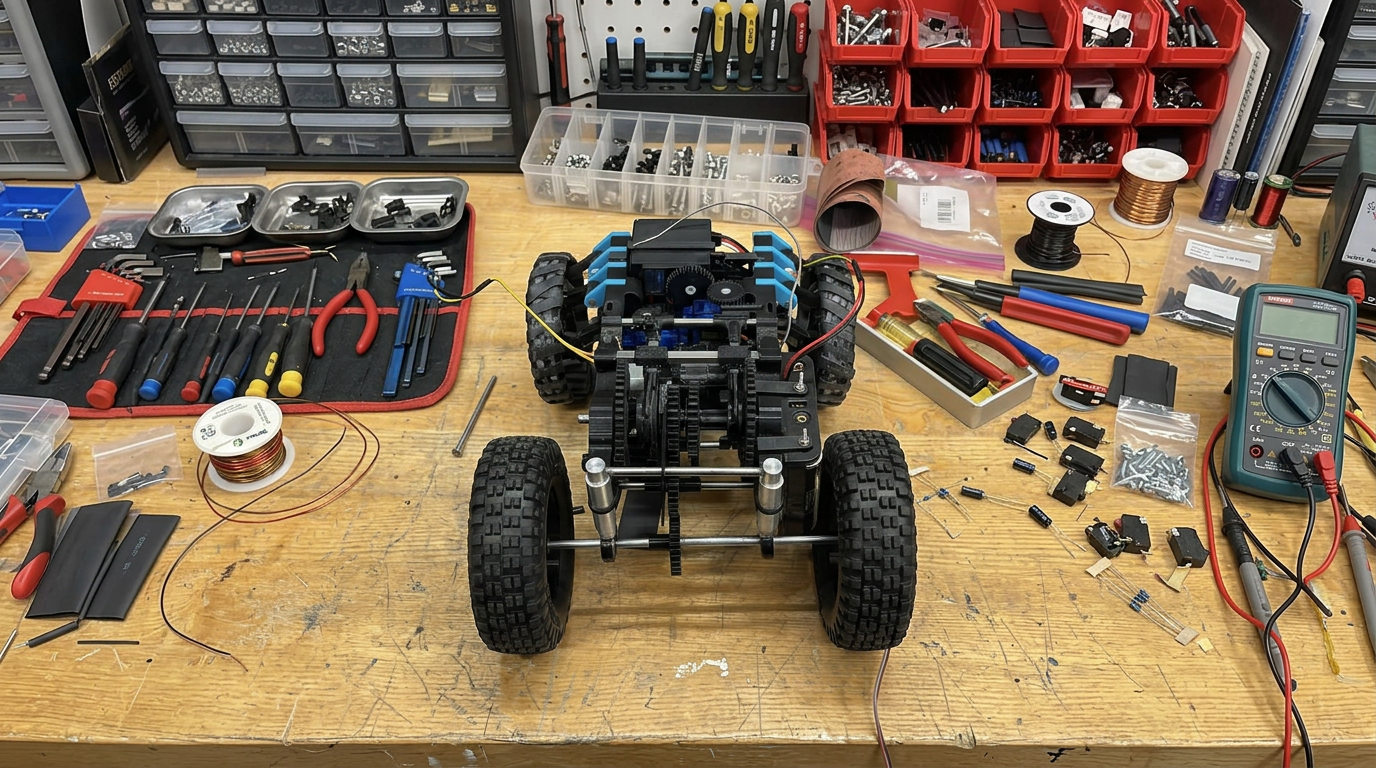
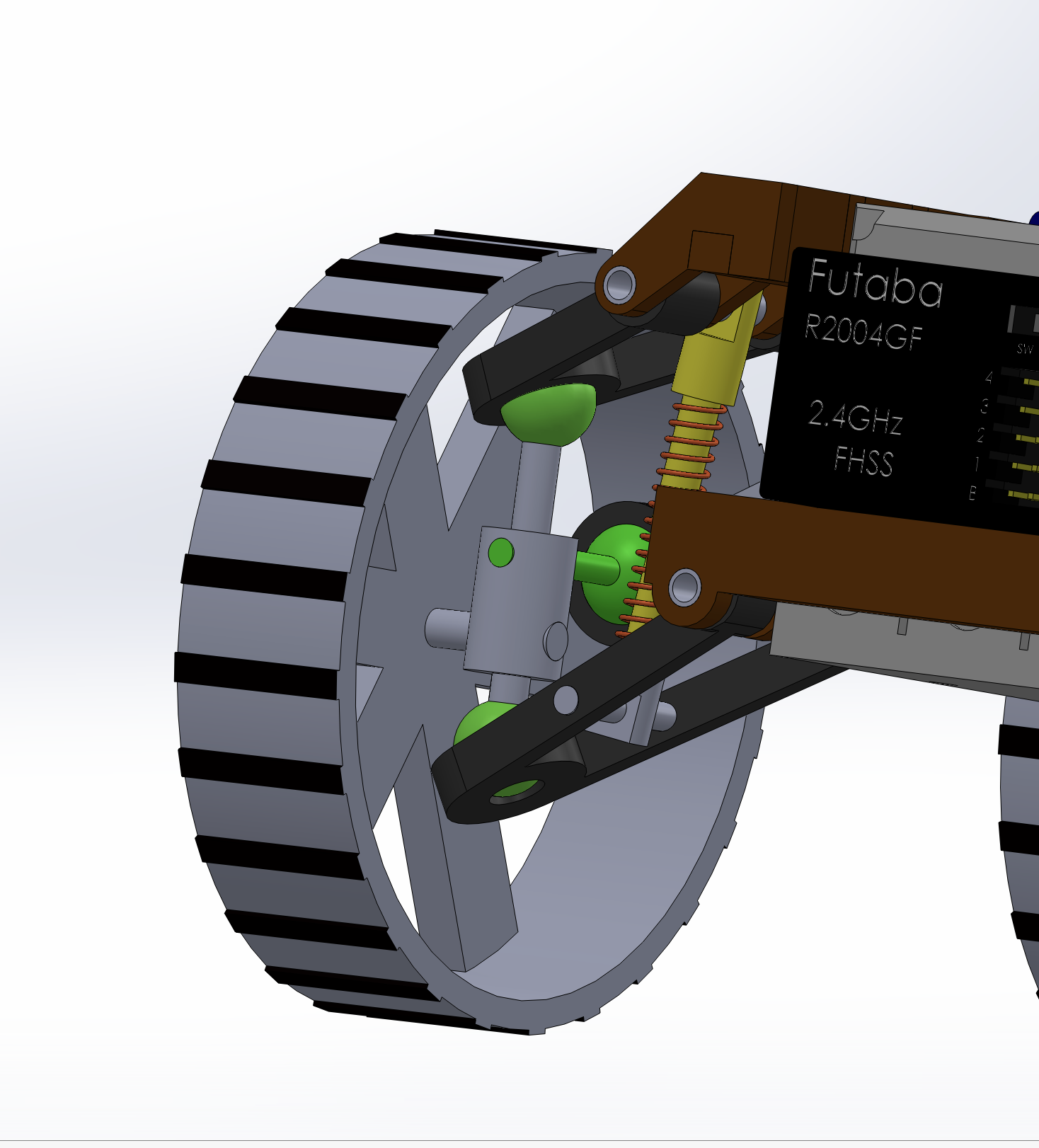
The Remotely Operated Rough Terrain Vehicle (RO-RTV) project focused on the design, fabrication, and testing of a small-scale car capable of handling uneven and off-road surfaces. The vehicle uses a multi-gear transmission providing two forward gears and one reverse gear to control speed and torque, a custom suspension system to absorb shocks, and a steering system designed for stable maneuverability. The complete vehicle was modeled in CAD, with components machined, 3D-printed, and fabricated for assembly.
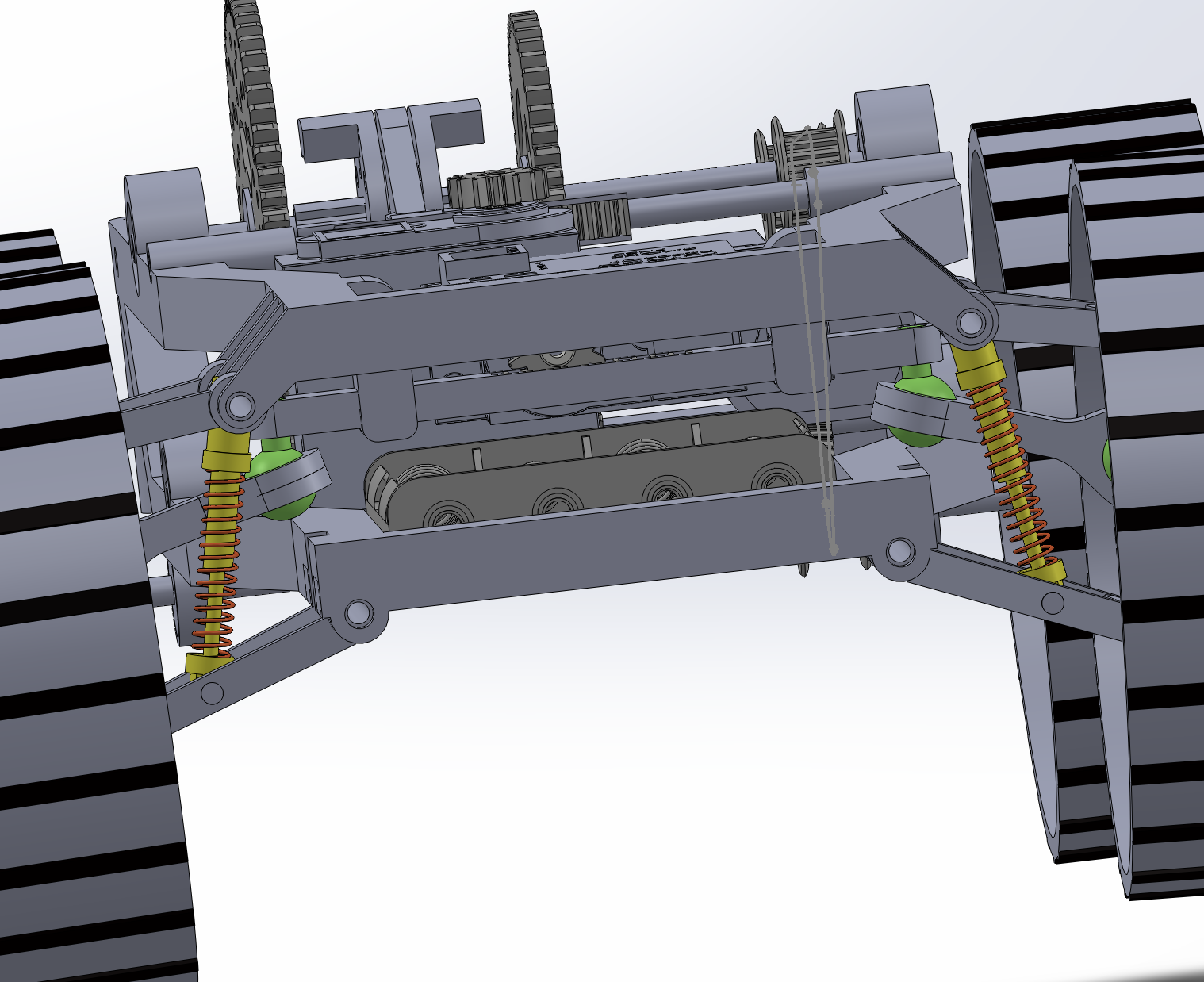
Powertrain and transmission — The vehicle is powered by an electric motor, which initially ran at full speed without modulation. A custom gearbox with two forward gears and one reverse gear was developed: the lower forward gear provides high torque for climbing obstacles, the higher gear enables faster travel on smoother terrain, and reverse aids maneuvering in confined spaces.
Suspension — The front suspension uses two U-shaped arms mounted to the chassis via ball joints, with a central spring and damper between them so each wheel can move independently while sharing load distribution. The rear suspension uses tubular housings with internal springs and bearings at the bottom of the tubes to allow smooth vertical motion of the suspension rods. The geometry was optimized in CAD for adequate travel while maintaining compactness and structural strength.
Steering — A custom steering system provides reliable maneuverability over varying terrain while maintaining stability during sharp turns. Linkages and joints were fabricated to be robust against repeated mechanical stress, with remote actuation integrated into the vehicle's control system.
Results — The assembled RO-RTV performed strongly in rough terrain. The transmission allowed smooth gear shifts and flexibility between torque and speed, the suspension absorbed shocks effectively, and the steering enabled controlled navigation. Limitations included battery endurance and gear-ratio efficiency. Future improvements include advanced remote control electronics, higher capacity power systems, and sensors for semi-autonomous operation.