Aerial Climate Monitor
Drone-mounted indoor climate sensing
- Project year
- 2025
- Status
- Completed
A DJI Tello drone fitted with an Arduino Uno, Wi-Fi shield and DHT22 sensor to map temperature and humidity across indoor spaces in real time.
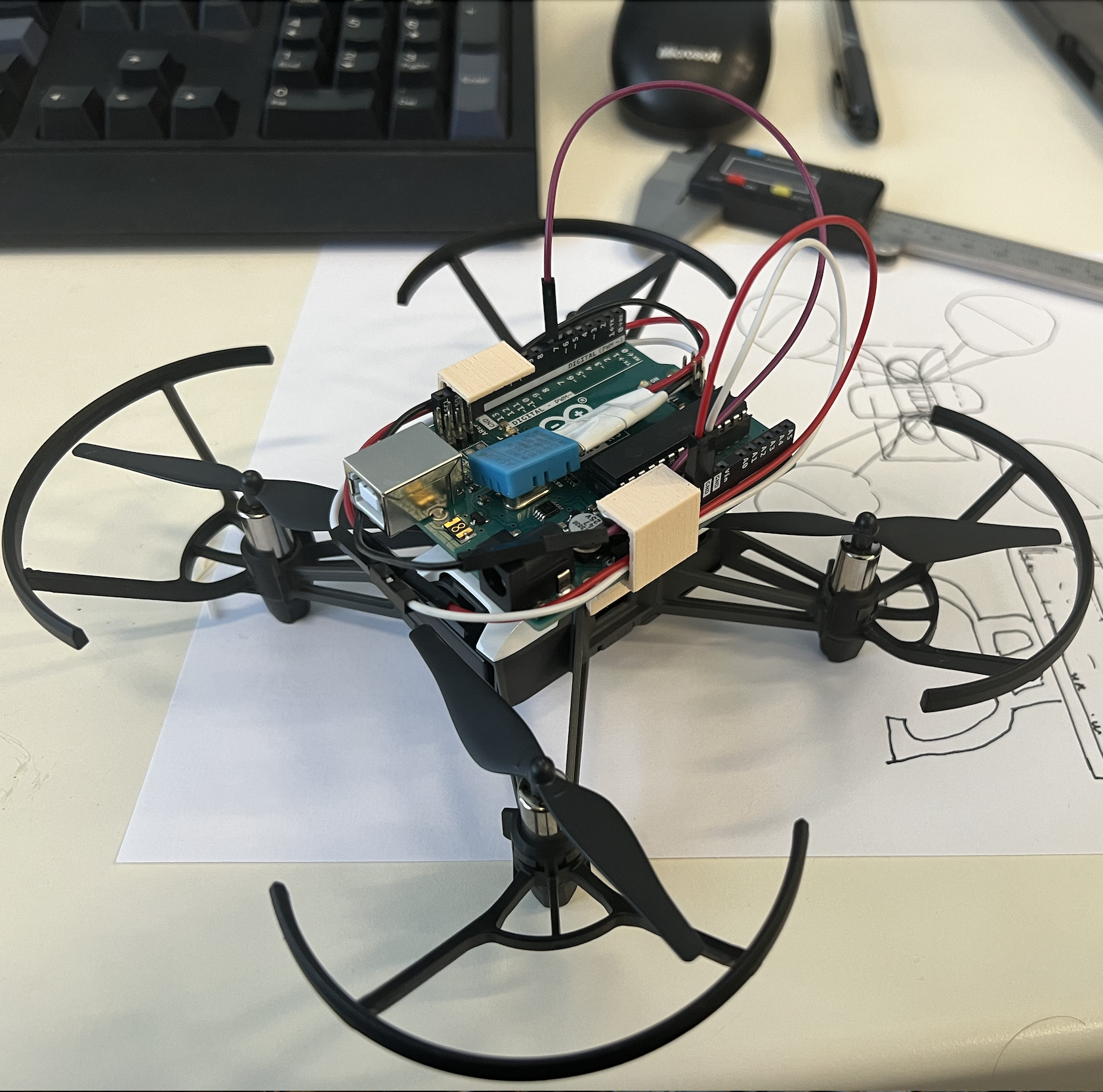
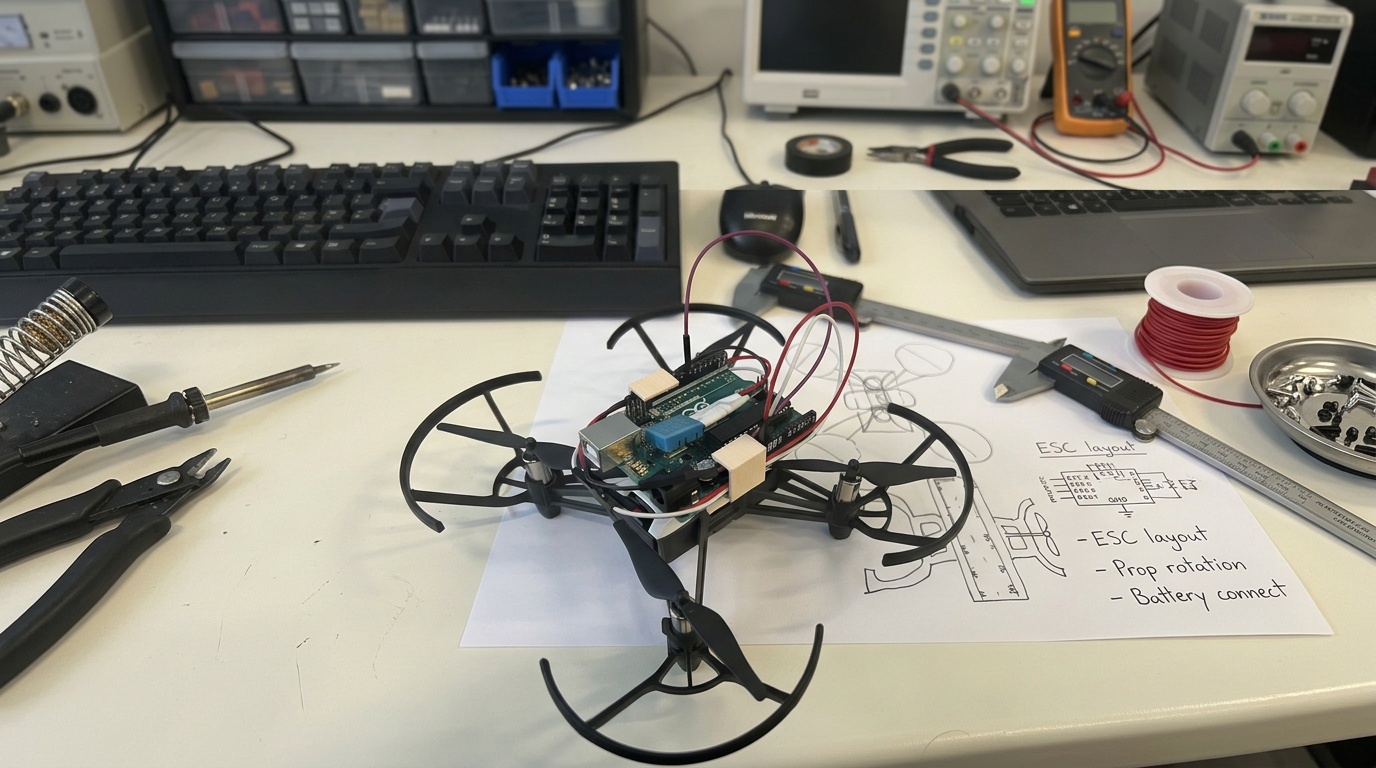
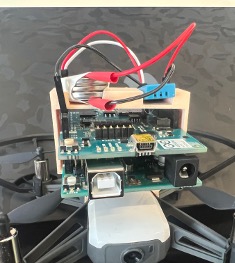
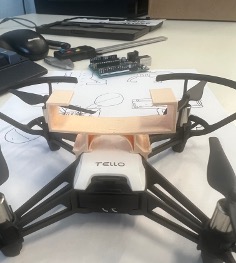
The Aerial Climate Monitor is a custom-built environmental monitoring system designed by integrating a DJI Tello drone with an Arduino Uno, Wi-Fi shield, and DHT22 temperature-humidity sensor. The system collects and stores climate data such as temperature and humidity in real time while maintaining the drone's ability to perform stable aerial flights. A custom 3D-printed mounting bracket was designed to securely attach the electronics to the drone without significantly affecting its balance or performance.
Introduction — Indoor environments such as offices, laboratories, and industrial spaces rely heavily on HVAC systems to maintain comfortable and safe conditions. Temperature and humidity levels can vary significantly across zones in the same building due to airflow patterns, obstructions, or equipment placement, and traditional fixed sensors provide only localized data. The Aerial Climate Monitor addresses this by using a lightweight drone-mounted sensor system to measure indoor climate conditions dynamically across multiple locations, enhancing HVAC performance analysis and providing more comprehensive data for energy optimization, occupant comfort, and indoor air quality studies.
System design and components — The hardware includes an Arduino Uno microcontroller, a Wi-Fi shield, a DHT22 sensor, and an SD card module. Data is transmitted wirelessly over Wi-Fi for real-time monitoring and simultaneously logged to an SD card for backup and offline analysis. A lightweight, durable mounting bracket was modeled and 3D printed, with careful attention to weight and aerodynamic drag so the drone's stability and flight efficiency were not compromised.
Testing and performance evaluation — Baseline flights without the hardware were compared against flights with the bracket and electronics installed. Results indicated a slight reduction in flight time due to added weight, but no significant issues in stability or maneuverability. The sensor consistently transmitted and logged accurate data in both static and in-flight conditions. For HVAC-focused testing, the drone was flown in a controlled indoor environment to map variations across zones, demonstrating its value for diagnosing airflow imbalances.
Results and conclusion — The project demonstrated that low-cost sensors and microcontrollers can be effectively integrated with small drones for indoor climate monitoring. Real-time Wi-Fi transmission plus SD logging ensures data redundancy and flexibility. Future improvements include lighter hardware to extend flight duration and additional sensors such as CO₂ or air quality for broader HVAC diagnostics.